
"invasive species"
80 article(s) found

Business in coffee grounds: growing mushrooms
In 1994, ZERI (ZeroEmissionsResearchInitiatives, Zero Emission Research and Innovation Foundation) first used the discarded coffee pulp from the farm as a substrate to grow mushrooms for human consumption, and then used the substrate to raise animals. It took nearly 10 years to do research, using 20 academic papers to support plans from pulp to protein, from farm to consumer.
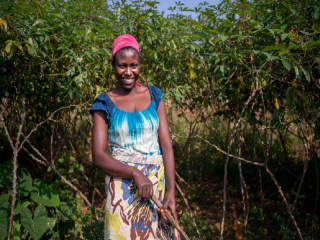
Congolese Coffee | History of Coffee cultivation in the Democratic Republic of the Congo _ introduction to the producing areas of Congolese coffee beans
Coffee from the Democratic Republic of the Congo was introduced from Liberia in 1881. When the Congo officially began to grow coffee in 1898, because of the Belgian colonial invasion, the Belgian colonists discovered a new coffee tree species native to the Democratic Republic of the Congo. It was so strong that it was named Robusta.

Introduction to boutique coffee with full aroma and taste characteristics of Bolivian snow vein manor
It formed a federation with Peru in 1836 and collapsed as a result of the Chilean invasion in 1839. In 1863, rich saltpetre deposits were discovered in Atacama province along the Pacific coast. In 1879, Chile sent troops to occupy the mining area, and Bolivia joined forces with Peru to wage the Pacific War with Chile. Bolivia was defeated in 1883 and ceded the saltpeter-rich Pacific coast to Chile, Bolivia in 1904.

Intense aroma of Indonesian mantinen coffee flavor taste Manor region boutique coffee Introduction
Indonesia was occupied by Japan in 1942. After Japan surrendered in 1945, Indonesia broke out in August Revolution. On August 17, 1945, Indonesia declared independence and established the Republic of Indonesia. After independence, Indonesia armed resistance to the invasion of Britain and Holland, launched three wars of independence. After 1947, the Netherlands and Indonesia signed the Indo-Dutch Round Table in November 1949 after many wars and consultations.

Introduction to the characteristics of Manor Manor with strong flavor and flavor of Indonesian Manning Coffee
In the 15th century, Portugal, Spain and Britain invaded successively. The Dutch invaded in 1596 and the East India Company with government authority was established in 1602. after the colonial government Indonesia became independent at the end of 1799, it successively armed against the invasion of Britain and the Netherlands and launched three wars of independence. After 1947, the Netherlands and Indonesia signed India and the Netherlands in November 1949 after many wars and negotiations.
The three native species of coffee
The three main native species of coffee are coffee varieties: Arabica Arabica, Robusta Robusta, and Liberia Liberica. The first two are relatively long-term, while the latter is hardly in circulation on the market and is only traded within parts of West African countries. Arabica is mainly produced in Brazil, Colombia, Guatemala, Jamaica, Mexico and other American countries, the Caribbean Sea.

The three native species of high-quality coffee
There are three main varieties of coffee: Arabica Arabica, Robusta Robusta, and Liberia Liberica. The first two are relatively long-term, while the latter is hardly in circulation on the market and is only traded within parts of West African countries. Arabica is mainly produced in Brazil, Colombia, Guatemala, Jamaica, Mexico and other American countries, and Costa Rica in the Caribbean.

There are three main native species of coffee in coffee varieties.
There are three main varieties of coffee: Arabica Arabica, Robusta Robusta, and Liberia Liberica. The first two are relatively long-term, while the latter is hardly in circulation on the market and is only traded within parts of West African countries. Arabica is mainly produced in Brazil, Colombia, Guatemala, Jamaica, Mexico and other American countries, and Costa Rica in the Caribbean.

Three native species of coffee compare the common sense of coffee
There are three main varieties of coffee: Arabica Arabica, Robusta Robusta, and Liberia Liberica. The first two are relatively long-term, while the latter is hardly in circulation on the market and is only traded within parts of West African countries. Arabica is mainly produced in Brazil, Colombia, Guatemala, Jamaica, Mexico and other American countries, and Costa Rica in the Caribbean.

Introduction to the flavor and taste of coffee varieties in Fenghuang Manor, Costa Rica
From 1821 to 1870, the Costa Rican regime was mainly controlled by J.R. Morapolas and J.M. In the hands of the two Montealegre families, the economy has developed greatly, and coffee has grown particularly rapidly and become a major export product. From 1855 to 1857, President Morapolas commanded the Costa Rican army and other Central American countries to crush American adventurer W. Volcker's invasion defended

Introduction of Colombian Rosa Coffee description of characteristics and Flavor of Fine Coffee Bean Manor
After the news of Napoleon I's invasion of Spain in 1808 spread to Colombia, the people of that place immediately launched an independence movement. On July 20, 1810, a large-scale uprising against Spanish colonial rule broke out in Bogota and the Governor of New Granada was arrested. In November 1811, representatives from all over the world organized Congress in Bogota and established the New Granada Joint Provincial Government, which was announced on November 11.

Full-bodied and thick Coffee from Santa Rita Manor, Colombia, introduction to Fine Coffee
After the news of Napoleon I's invasion of Spain in 1808 spread to Colombia, the people of that place immediately launched an independence movement. On July 20, 1810, a large-scale uprising against Spanish colonial rule broke out in Bogota and the Governor of New Granada was arrested. In November 1811, representatives from all over the world organized Congress in Bogota and established the New Granada Joint Provincial Government, which was announced on November 11.

Manning Coffee Flavor in Indonesia; introduction to the characteristics of boutique coffee beans in the manor area
Japan occupied Indonesia in 1942. After Japan surrendered in 1945, Indonesia broke out the August Revolution. On August 17, 1945, it declared its independence and established the Republic of Indonesia. After its independence, Indonesia successively armed against the invasion of Britain and the Netherlands, and launched three wars of independence. After 1947, the Netherlands and Indonesia signed the India-Netherlands round table meeting in November 1949 after many wars and negotiations.

The growing environment of top coffee producing countries introduces the producing places of fine coffee.
Guatemala is famous for producing fruity coffee beans and was rated as the largest coffee producer in Central America for most of the 20th and 21st centuries. Since the invasion of the Spanish colonists, Guatemala has been plagued by social problems such as poverty, hunger, unequal land distribution and racial discrimination, which have also hindered the development of the coffee industry in the country. The labor of the coffee industry in Guatemala

How to soak coffee beans in order to taste good?
Arabica beans, world-famous Blue Mountain Coffee, Mocha Coffee and so on, are almost all Arabica species. Shape: the shape of the bean is small, the front is long oval, the middle crack is narrow and tortuous, and the arc on the back of the bean is flat, uniform in size and shiny in color. Origin: Arabica coffee is grown in Brazil, Colombia, Central America and the Caribbean.

Colombian Hope Manor Coffee Flavor, taste characteristics, introduction to boutique coffee beans
After the news of Napoleon I's invasion of Spain in 1808 spread to Colombia, the people of that place immediately launched an independence movement. On July 20, 1810, a large-scale uprising against Spanish colonial rule broke out in Bogota and the Governor of New Granada was arrested. In November 1811, representatives from all over the world organized Congress in Bogota and established the New Granada Joint Provincial Government, which was announced on November 11.

Coffee flavor and taste characteristics of Indonesia Fuyin Manor introduction to Kopi Luwak Muscat Coffee
After its independence, Indonesia successively armed against the invasion of Britain and the Netherlands, and launched three wars of independence. After 1947, after many wars and consultations, the Netherlands and Indonesia signed the India-Netherlands Round Table Agreement in November 1949. According to this agreement, Indonesia established a federal republic on December 27 of the same year to participate in the Union of the Netherlands and India. In August 1950, the Federal Assembly of Indonesia adopted the provisional constitution.

What are the smaller coffee beans? is it sweetened to drink coffee?
1. Arabica grows Arabica beans, and the world-famous Blue Mountain Coffee and Mocha Coffee are almost all Arabica varieties. Shape: the shape of the bean is small, the front is long oval, the middle crack is narrow and tortuous, and the arc on the back of the bean is flat, uniform in size and shiny in color. Origin: Arabica coffee is grown in Brazil, Colombia and Central America in South America.

Introduction to Mantenin Coffee Variety producing area, Indonesia, Fine Coffee Bean Manor
Japan occupied Indonesia in 1942. After Japan surrendered in 1945, Indonesia broke out the August Revolution. On August 17, 1945, it declared its independence and established the Republic of Indonesia. After its independence, Indonesia successively armed against the invasion of Britain and the Netherlands, and launched three wars of independence. After 1947, the Netherlands and Indonesia signed the India-Netherlands round table meeting in November 1949 after many wars and negotiations.

Flavor and taste characteristics of Colombian coffee producing area introduction of boutique coffee beans in Hope Manor
After the news of Napoleon I's invasion of Spain in 1808 spread to Colombia, the people of that place immediately launched an independence movement. On July 20, 1810, a large-scale uprising against Spanish colonial rule broke out in Bogota and the Governor of New Granada was arrested. In November 1811, representatives from all over the world organized Congress in Bogota and established the New Granada Joint Provincial Government, which was announced on November 11.